Overview
Reducing friction across modern workflows.
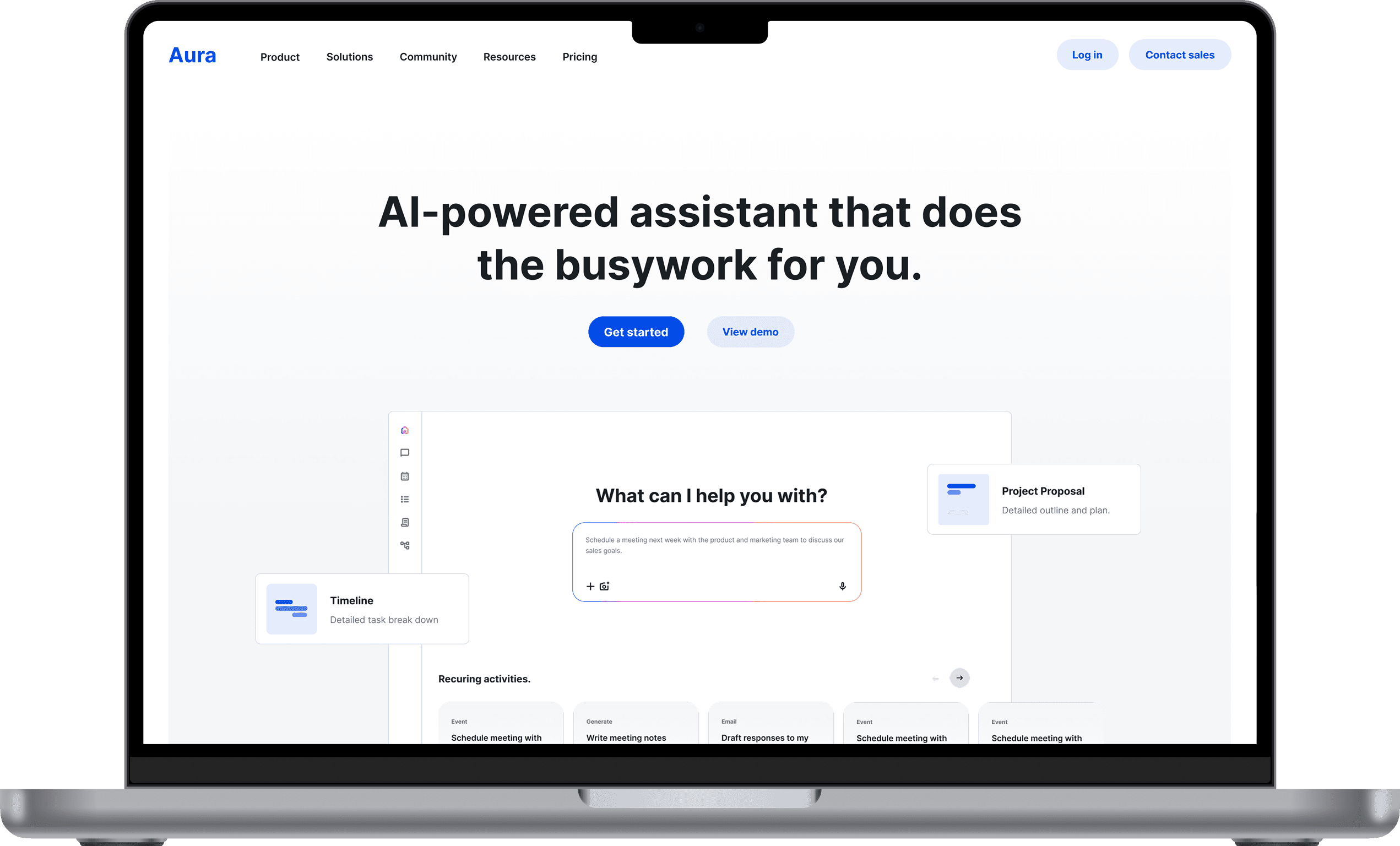
Aura is an AI-powered productivity assistant that helps teams schedule, document, and follow up without losing momentum or context. As work becomes more fragmented across tools, the cost of coordination grows, making clarity and automation essential.
My role.
As Senior Product Designer, I led the end-to-end experience, shaping core workflows and designing how AI surfaced value in ways that strengthened user trust.
Team & tools.
I worked closely with product managers, engineers, and a brand designer, collaborating primarily in Figma. Regular reviews aligned product intent with technical constraints and evolving AI capabilities.
Project scope.
Over six months, the scope focused on three core capabilities: smart scheduling, document generation, and automated follow-up, prioritizing coherence over rapid expansion.
My Impact
Making automation feel intentional.
The Process
Navigating ambiguity with structure.
Design decisions were shaped by evolving AI capabilities and the need to avoid over-automation. Progress came from repeatedly testing where structure was needed and where restraint was more effective.
Research and discovery.
Early discovery highlighted that teams didn’t struggle with productivity tools individually, but with how fragmented those tools felt together. Users described losing time reconstructing context across scheduling, documentation, and follow-up. This insight reframed the problem as one of orchestration rather than feature depth.
Exploration and iteration.
Usability testing & refinement.
Aura became useful when it stopped trying to automate everything and understood how we worked instead of forcing a process.
Operations Lead
Final Designs
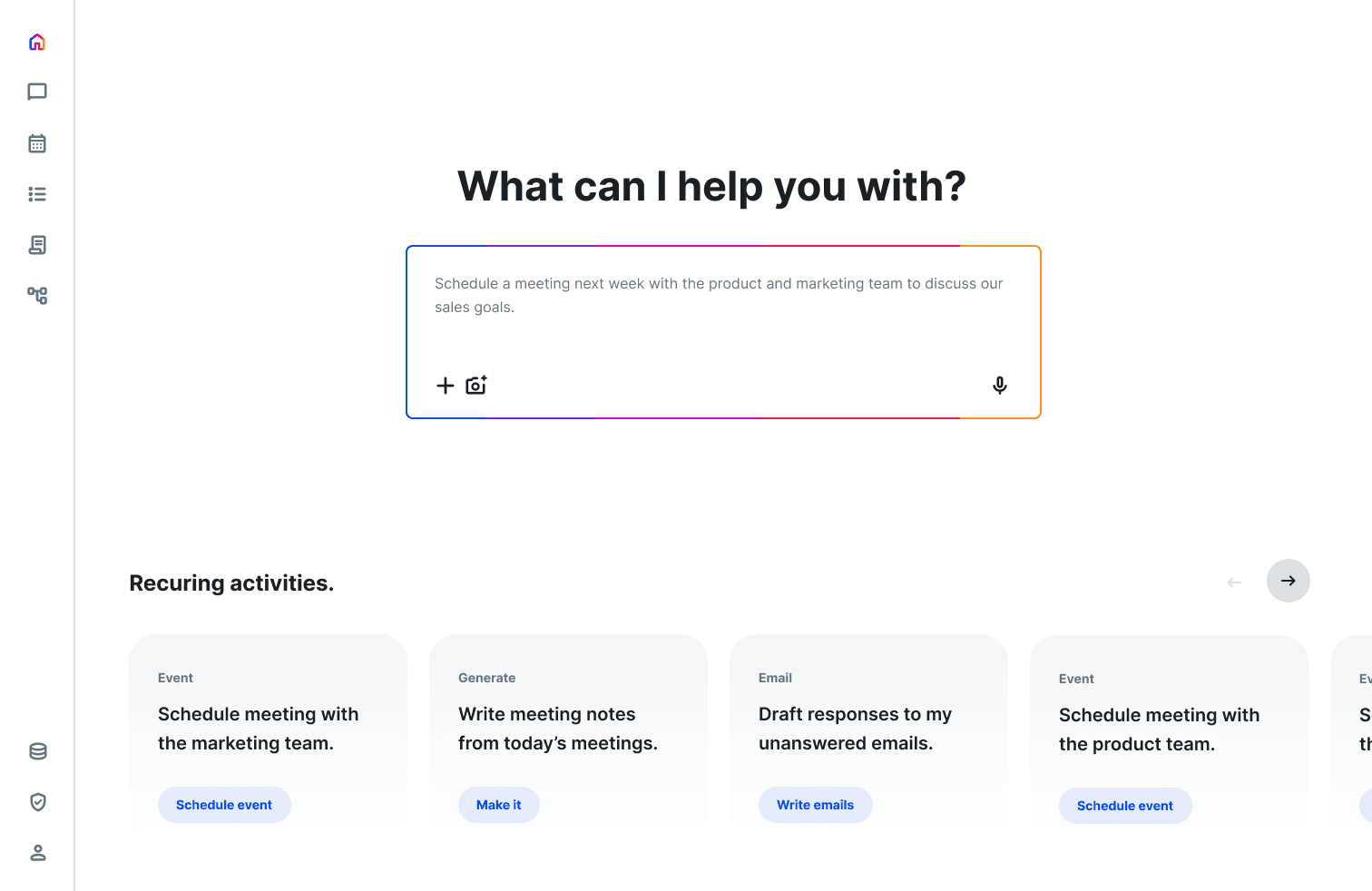
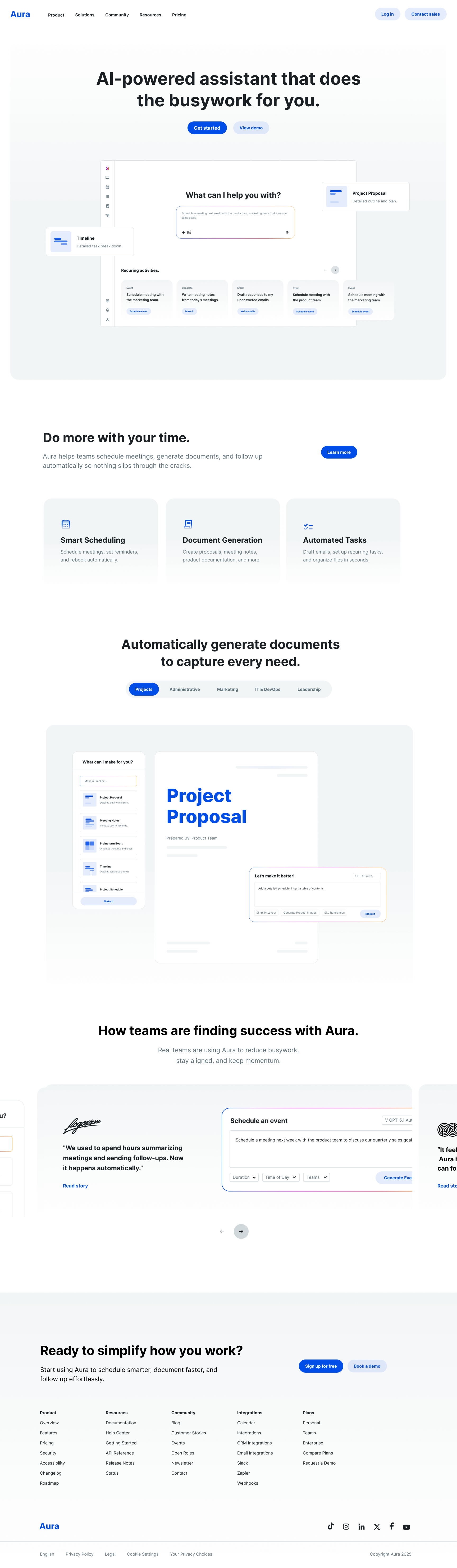
Designed to support real work.
Lessons Learned
What shaped the outcome.
This project underscored how critical judgment and framing are when designing AI-driven products. The difference between helpful and overwhelming often came down to subtle design decisions.
Automation requires clear boundaries.
Users trusted Aura more when automation had clear limits and predictable behavior. Explicit handoffs between system and user control reduced anxiety and improved adoption. Clarity around responsibility proved more valuable than added capability.
Focus creates trust.
Reducing scope and clearly defining what Aura would and wouldn’t do made the product more useful. When the system felt predictable and aligned with how teams already worked, adoption improved and confidence grew.
Tasks Completed
Product Discovery
Interaction Design
Information Architecture
Accessibility
Prototyping
Keep Exploring